
- Your cart is empty
- Continue Shopping

Common Mistakes When Using Disposable Gloves
-
 Testing
 - Posted on

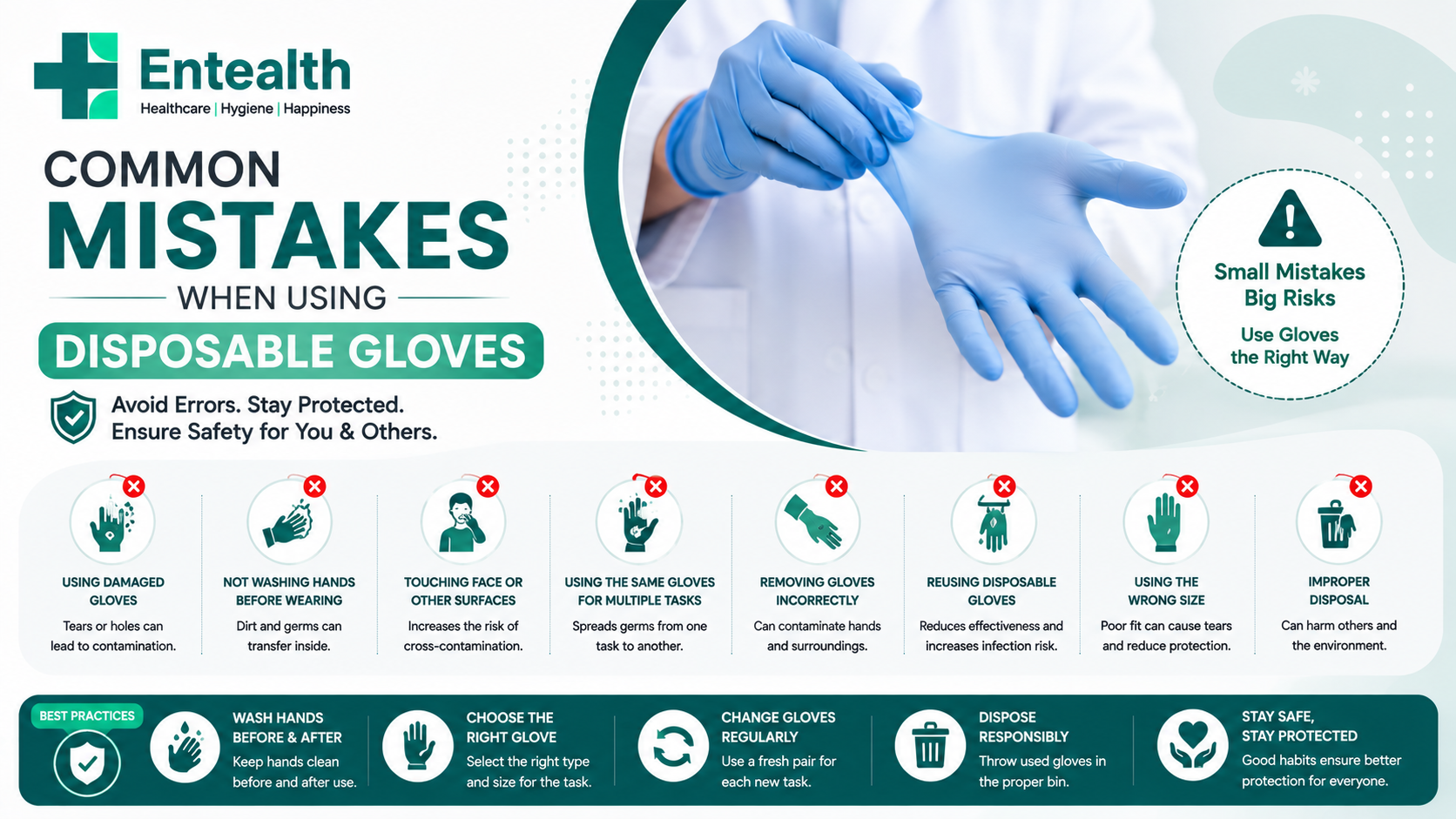
Somewhere between putting gloves on and using gloves correctly, there’s a gap most people never notice. You wash your hands, snap on a pair of nitrile gloves, and figure the protection is handled. Then you change a dressing, answer your phone mid-task, and go straight to prepping lunch- still gloved, still feeling careful.
That’s the thing about glove mistakes. They rarely look like mistakes. They look like normal caregiving.
If you’re looking after a parent, a spouse, or anyone recovering at home, gloves are one of the few tools standing between you and cross-contamination. But they only do that job if you’re using them right. Here’s where most people slip, and what actually fixes it.
Why Disposable Gloves Matter in Homecare
In a hospital, someone is tracking glove protocol for you. At home, it’s just you, a box of gloves, and whatever routine you’ve settled into, which, if nobody ever showed you the “correct” way, might be full of small shortcuts you don’t even register as shortcuts.
The stakes are real, though. Wound care, catheter changes, medication handling, cleaning up after an accident -these aren’t low-risk tasks just because they’re happening in a living room instead of a clinic. A tear you don’t notice, or a habit of touching “clean” things with contaminated gloves, can pass an infection to someone whose immune system may already be doing enough work.
Where Glove Habits Usually Go Wrong
Before you start, keep everything close. Walking away mid-change, just to grab wipes, is how messes turn into disasters. Gather:
- Disposable gloves (2–3 pairs)
- New adult diaper (correct size and absorbency)
- Disposable underpads or bed protector sheets
- Wet wipes or a bowl of lukewarm water with a soft cloth
- Mild, pH-balanced cleanser (avoid harsh soap
- Barrier cream or diaper rash cream
- A trash bag for disposal
- A fresh bedsheet, if needed
- Hand Sanitizer
After a dozen changes, setting it all out becomes almost automatic. Still, at the beginning, it helps to re-check what you have, because “almost” isn’t good enough.
Where Glove Habits Usually Go Wrong
1. Wrong Size
Sounds basic, but it’s the most common mistake out there. Too tight, and the gloves tear at the seams within minutes. Too loose and they bunch at the fingertips, killing your grip. Check the size chart; it takes ten seconds and saves a wasted box.
2. Not Changing Gloves Between Tasks
This is really the core of using gloves right, one task, one pair. Someone handles raw chicken, then slices vegetables in the same gloves. Someone goes from a wound dressing straight to an IV line. It looks fine. Cross-contamination doesn’t announce itself; it just happens quietly.
3. Skipping Hand Hygiene
Gloves add to hand-washing, they don’t replace it. Glove over unwashed hands, and you seal in whatever was already there, sweat included, for the whole time it’s on. Nitrile doesn’t breathe, so bacteria just sit instead of rinsing off. Wash before and after, always.
4. Touching Things You Shouldn't
Almost impossible to fully avoid, honestly. Phones are the biggest offender, along with light switches, hair, and, constantly, faces. The moment a gloved hand touches something unclean, the glove’s no cleaner than bare skin, arguably worse since people trust it more. Better to remove, wash, and re-glove.
5. Not Checking for Tears or Holes
Gloves fail sometimes, not often, but enough to matter, especially with high-volume boxes where quality varies. Quick test: fill one with air like a balloon and squeeze lightly. Air escaping means it’s trash, not wearable, especially in settings with chemicals or fluids.
6. Wearing Gloves Too Long
Nitrile has a shorter shelf life during wear than most assume. Heat, friction, and sweat degrade it fast, creating a warm spot that’s honestly worse for bacteria than bare skin. Change every 30 to 60 minutes during continuous use, sooner if torn or soiled
7. Reusing Disposable Gloves
They’re called disposable for a reason. Someone pulls off a pair, sets it down “for later,” and puts it back on, to save money or habit. Once off, the inside’s touched by hands that may not be clean. Reusing isn’t saving anything; it’s wearing contamination twice.
8. Removing Gloves the Wrong Way
There’s a technique, and most people skip it; they yank gloves off by the fingertips, guaranteeing contact with whatever’s on them. Better way: pinch the outside near the wrist, peel it inside-out, then slide bare fingers under the second glove from inside. Five extra seconds, real difference.
Step 8: Remove the Old Diaper
Pull the soiled diaper out from underneath and place it directly in the trash bag. Change your gloves before touching the new diaper.
9. Ignoring Allergies and Skin Reactions
Latex allergies get talked about; nitrile sensitivities much less, even though they exist. Redness, itching, or a rash after glove use isn’t something to push through. Often, it’s the accelerator chemicals in manufacturing, not the material, which is why switching brands sometimes helps.
10. Ignoring the Expiration Dat
Disposable gloves have a shelf life, usually three to five years unopened, printed right on the box; most people never check. Past that, nitrile loses elasticity, gets brittle, tears easily, and doesn’t stretch right when pulled on. A glove that snaps immediately isn’t defective; it’s just old.
How to Use Nitrile Gloves Correctly, Step by Step
Nitrile is generally the better pick for home care – latex-free, more puncture-resistant than vinyl, and less likely to trigger a reaction, which matters given how common latex sensitivity actually is. But the material only helps if the technique around it holds up, too.
Donning (putting on) gloves:
- Wash your hands with soap and water for at least 20 seconds, then dry completely.
- Check the glove for tears or defects.
- Slide your hand in without touching the outer surface excessively.
- Adjust for a snug, comfortable fit before starting the task.
Doffing (removing) gloves safely:
- Pinch the outside of one glove near the wrist, avoiding touching bare skin.
- Peel it off, turning it inside out as you pull.
- Hold the removed glove in your still-gloved hand.
- Slide two fingers of your bare hand under the wrist of the second glove (touching only the inside).
- Peel it off over the first glove, so both end up inside out, one inside the other.
- Dispose of both in a sealed bag or bin.
- Wash your hands immediately.
Expert Tip: Keep a small poster of these steps near your home care station until the routine becomes second nature.
Disposable Nitrile Gloves vs Latex vs Vinyl — Which Is Right for Home Use?
Feature | Nitrile Gloves | Latex Gloves | Vinyl Gloves |
Allergy risk | Very low (latex-free) | Higher common allergen | Low |
Puncture resistance | High | Moderate | Low |
Chemical resistance | High | Moderate | Low |
Fit and sensitivity | Good | Excellent | Loose fit |
Best for | Wound care, medication handling, and general home care | Short tasks where no allergy risk exists | Low-risk, short-duration tasks like food handling |
Cost | Slightly higher | Moderate | Most affordable |
For most home care situations dressing changes, medication handling, personal hygiene assistance nitrile is the safer default, mostly because latex allergies are more common than people expect and a reaction mid-task is the last thing you need. Vinyl has its place for quick, low-stakes jobs, but it tears easily enough that I wouldn’t trust it for anything involving fluids.
Common Mistakes vs Correct Practice
Mistake | Why It’s Risky | Correct Practice |
Skipping handwashing before gloving | Traps germs under the glove | Wash and dry your hands first |
Wrong glove size | Tears or reduced grip | Choose a snug, correct-size fit |
Reusing gloves | Cross-contamination | One-time use only, every time |
Same gloves for multiple tasks | Spreads germs across tasks | Change gloves between each task |
Sanitizer over gloves | Degrades material | Change gloves instead |
Careless removal | Skin contacts contaminated surface | Use the peel-and-tuck removal method |
Poor disposal | Spreads germs at home | Seal in a bag before discarding |
Expert Tips for Family Caregivers
- Keep multiple glove sizes at home if more than one family member provides care.
- Store gloves in a cool, dry place away from direct sunlight, which can weaken the material over time.
- Keep a small stock of both nitrile and vinyl gloves, nitrile for higher-risk tasks, vinyl for quick, low-risk jobs.
- Set a simple house rule: one pair of gloves, one task, every time.
- If you notice skin irritation after regular glove use, consider using cotton liners underneath or switching brands.
Key Takeaways
- Disposable gloves protect only when used correctly, not just worn.
- Never reuse disposable gloves, even nitrile ones, for patient care tasks.
- Change gloves between every task, not just between patients.
- Correct removal technique matters as much as correct donning.
- Nitrile gloves are generally the best all-around choice for home care due to their durability and low allergy risk.
Frequently Asked Questions
Can I wash and reuse disposable nitrile gloves at home?
No. Disposable gloves, including nitrile ones, are meant for single use in patient care settings. Washing weakens the material and doesn’t guarantee full decontamination
How do I know if my gloves are the right size?
The glove should fit snugly against your skin without pinching or bunching. If your fingers feel restricted or the glove slips at the wrist, try a different size.
Are nitrile gloves better than latex gloves for home care?
For most home care needs, yes. Nitrile gloves are latex-free, more puncture-resistant, and safer for people with latex sensitivity, which is common in the general population.
How often should I change gloves while caring for a patient at home?
Change gloves between every distinct task, for example, after wound care and before handling food or medication, even if you’re still caring for the same patient.
Can I use hand sanitizer while wearing gloves instead of changing them?
It’s not recommended. Sanitizers can degrade certain glove materials, and it doesn’t replace the need to change gloves between contaminated and clean tasks.
What's the correct way to remove gloves without touching contaminated surfaces?
Peel one glove off from the wrist, turning it inside out, and hold it in your gloved hand. Then slide bare fingers under the second glove’s wrist (touching only the inside) and peel it off over the first, so both end up inside out and enclosed. Wash your hands right after.
