
- Your cart is empty
- Continue Shopping

What Is an Underpad? Types, Uses & Materials Explained
-
 Testing
 - Posted on

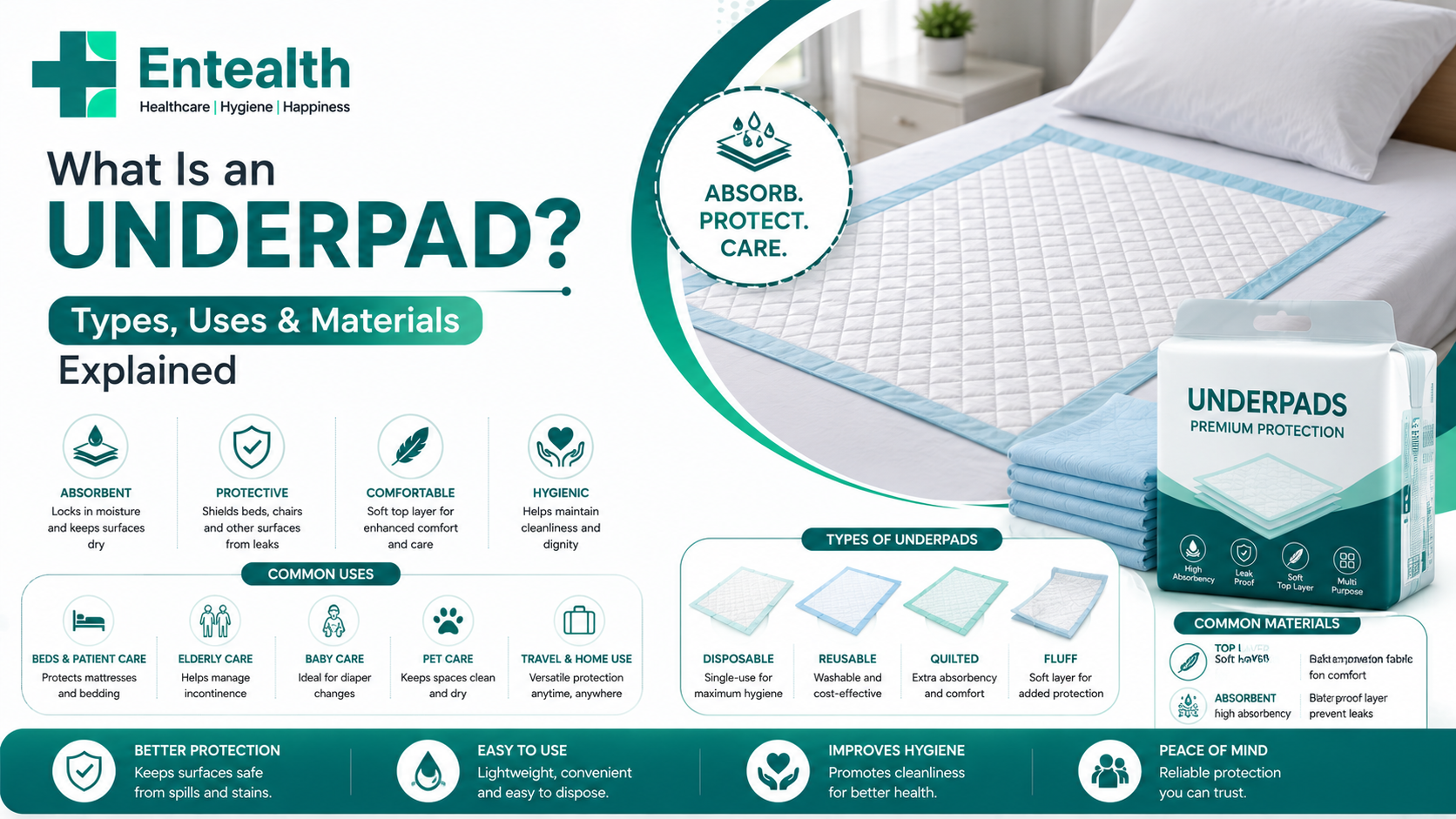
Whether you’re an elderly parent, a bedridden patient, or someone who’s just come out of surgery, you’ve likely heard someone mention the word underpad somewhere. However, what exactly is an underpad, and do you really need one?
Simply put, an underpad is a material that is used on a bed, chair, or wheelchair to prevent urine, sweat, wound drainage, or other fluids from getting on the surface of the bed, chair, or wheelchair. One of the most common medical products used in domestic care, hospitals, and nursing homes. A good underpad can be the difference between a clean up that gets done quickly and in a dignified manner, or hours of additional laundry, skin irritation, or a ruined mattress.
We’ll explore what disposable underpads are made of, the various types of underpads, how to choose the right one, and answer some of the most common questions caregivers have.
What Is an Underpad?
An underpad, also known as a bed pad, “chux” pad, or incontinence pad, is a rectangular absorbent pad that is placed between the patient and a bed, mattress, wheelchair, or recliner. Absorbs the liquid fast and traps it in the interior, making the outer surface dry to the touch even after absorbing the liquid.
Originally hospital-designed, underpads are intended for use by the bedridden or post surgery patient. Today, they’re also a common part of at-home care for people with incontinence, post-surgical patients, menstrual leakage, and for families who have limited mobility and need to care for a loved one who doesn’t have a clear idea when they need to go to the bathroom.
What Are Underpads Made Of?
Most underpads are built in three layers, and knowing this construction process can help you know if the pad is of quality or not:
- Contact layer: The top layer or fabric, which is designed to rest on the skin or bedsheet, is typically non-woven and of polypropylene. It should not be plasticky to prevent irritation; it should be cloth-like.
- Absorbent core (middle layer): This is the layer where the work really takes place. It is usually composed of fluff pulp, and in some cases, super-absorbent polymer (SAP), which absorbs liquid and turns it into a gel to prevent it from seeping into other materials.
- Waterproof backing (bottom layer): A plastic or polyethylene film that prevents the fluid from permeating to the mattress, chair, or floor.
Higher-end underpads add a fourth element, a tissue or acquisition layer between the top sheet and the core, which spreads liquid evenly and speeds up absorption, reducing pooling.
Types of Underpads
Broadly, underpads fall into two categories, with a few specialised variants worth knowing about.
1. Disposable Underpads
These are pads used for one time, and then discarded. They are the easiest to use in the hospital and for people who have heavy or frequent incontinence, as they eliminate the need to wash.
2. Reusable (Washable) Underpads
These pads are made from cotton or polyester and backed with a waterproof vinyl or PUL (polyurethane laminate) backing that can be machine-washed and used hundreds of times. They make a good choice for those with long-term incontinence and will be more affordable in the long term.
3. Fluff-Core vs SAP-Core Disposable Underpads
However, within disposable there is a further division – ‘fluff-core pads’ are softer, bulkier, cheaper pads, whereas ‘SAP-core pads’ are thinner, more absorbent, and better odour control. The pads used for heavy flow or overnight use are likely to be SAP-core pads.
Bariatric Underpads
Bigger, heavier, and reinforced pads for bariatric patients with increased absorbency and tear resistance.
Disposable vs Reusable Underpads: Comparison
Feature | Disposable Underpads | Reusable Underpads |
Best for | Hospitals, heavy/frequent use, travel | Long-term home care, budget-conscious families |
Cost | Low upfront, recurring cost | Higher upfront, lower long-term cost |
Hygiene | Single-use, very sanitary | Needs proper washing between uses |
Absorbency | Often higher (SAP core) | Moderate, depends on fabric layers |
Environmental impact | Higher waste generation | Lower, more sustainable |
Comfort | Soft non-woven top sheet | Cloth-like, breathable feel |
Maintenance | None – just dispose | Requires washing and drying |
Expert tip: Many caregivers actually use both reusable underpads as a base layer on the bed, with a disposable pad on top for quick daily changes. This reduces laundry load while keeping the bed protected.
Common Underpad Sizes and How to Choose One
Underpads typically come in these size ranges:
- 17″ x 24″ — ideal for wheelchairs, changing tables, or spot protection
- 23″ x 36″ — a popular mid-size for general bed protection
- 30″ x 36″ — the most common full-bed size for adults
- 36″ x 72″ (or larger) — designed to cover the entire mattress
When choosing a size, consider
Coverage area: Match the pad to the surface. A wheelchair needs a smaller pad than a double bed.
Absorbency level: Look for “moderate,” “heavy,” or “overnight” absorbency ratings based on how often the pad will be used.
Patient mobility: For patients who move around in bed, a larger pad with side “wings” that tuck under the mattress prevents slipping.
Skin sensitivity: Choose a soft, breathable, hypoallergenic top sheet if the patient has fragile or easily irritated skin.
Entealth’s large-size underpad is designed to provide ample coverage for adult beds, making it a practical choice for hospitals, home care settings, and long-term patient care.
Uses of Underpads
Most people don’t realize how flexible underpads can be:
- Incontinence Support for those who are elderly or permanently bedridden.
- Post-surgical recovery, preventing the bed from leaking or draining from the surgery,
- Menstrual protection on top of the bed
- Clean work surface during wound care and dressing changes at clinic/hospital,
- Diaper change and potty training for paediatric use and to treat nighttime bedwetting
- Accidents for senior pets and crate training for pets
- Travel protection, for car seats and unknown beds.
How to use an underpad correctly
1. Attach the underpad to the mattress or chair with the waterproof side on the mattress and the absorbent side on the top.
2. Place it where it is most likely to leak (usually under the hips and torso for a bedridden patient).
3. If the pad is winged, fold the wings tightly under the mattress so that they will not move.
4. Regularly inspect and change the pad, but do not wait for it to get wet; skin will break down with long exposure to moisture.
5. Reusable pads should be washed in cold/ warm water and air dried or tumble dried on low heat (don’t use fabric softener as this can reduce absorbency).
Common Mistakes to Avoid
- Using a pad that’s too small for the patient’s movement range, leaving the edges of the mattress exposed.
- Leaving a soiled pad on too long, which increases the risk of skin rashes and infections.
- Washing reusable pads with fabric softener coats the fibres and reduces absorbency over time.
- Choosing based on price alone, a cheaper pad with an inconsistent absorbent core can leak and cause more laundry, not less.
- Not layering pads for high-risk patients with heavy incontinence, a single thin pad often isn’t enough overnight.
Underpads vs Diapers: Which Do You Need?
Underpads and adult diapers solve related but different problems. Adult Diapers are worn on the body and manage output directly at the source, while underpads protect the surface the person is lying or sitting on. Many care plans use both together a diaper for direct absorbency and an underpad as a backup layer in case of overflow or diaper failure. If the patient is mobile and generally continent but at occasional risk of leaks (post-surgery, menstrual, or mild incontinence), an underpad alone may be sufficient.
Key Takeaways
- An underpad is an absorbent sheet used to protect beds, chairs, and other surfaces from fluids.
- Underpads are made of a soft top layer, an absorbent core (fluff pulp or SAP), and a waterproof backing.
- Disposable underpads suit hospitals and heavy use; reusable ones suit long-term home budgets.
- Size and absorbency should match the patient’s mobility and the frequency of use.
- Regular changing and correct placement prevent skin issues and leaks.
Frequently Asked Questions
What is the difference between an underpad and a chux pad?
There’s no real difference “chux” is simply a popular brand name that became a generic term for disposable underpads, much like how “Xerox” is used for photocopying.
How often should an underpad be changed?
It depends on usage, but as a general rule, change it as soon as it’s soiled or every 8–12 hours during regular use, whichever comes first, to prevent skin irritation.
Can underpads be used on wheelchairs?
Yes. Smaller-sized underpads (around 17″ x 24″) are commonly used to protect wheelchair seats and cushions from spills and leaks.
Are reusable underpads as absorbent as disposable ones?
Good-quality reusable underpads can offer solid moderate absorbency, but disposable pads with a super-absorbent polymer (SAP) core generally handle higher fluid volumes better, especially overnight.
Do underpads cause skin irritation?
A well-made underpad with a soft, breathable top sheet shouldn’t irritate the skin. However, leaving a soiled pad on for too long can lead to rashes, so timely changes are important. If irritation persists, consult a healthcare professional.
Can underpads be used for babies as well as elderly patients?
Yes. Underpads are commonly used for diaper changes, potty training, and protecting cribs or changing tables, in addition to their use in elderly and homecare settings.
