
- Your cart is empty
- Continue Shopping

Adult Diapers: A Complete Guide to Choosing the Right One for Comfort & Confidence
-
 Testing
 - Posted on

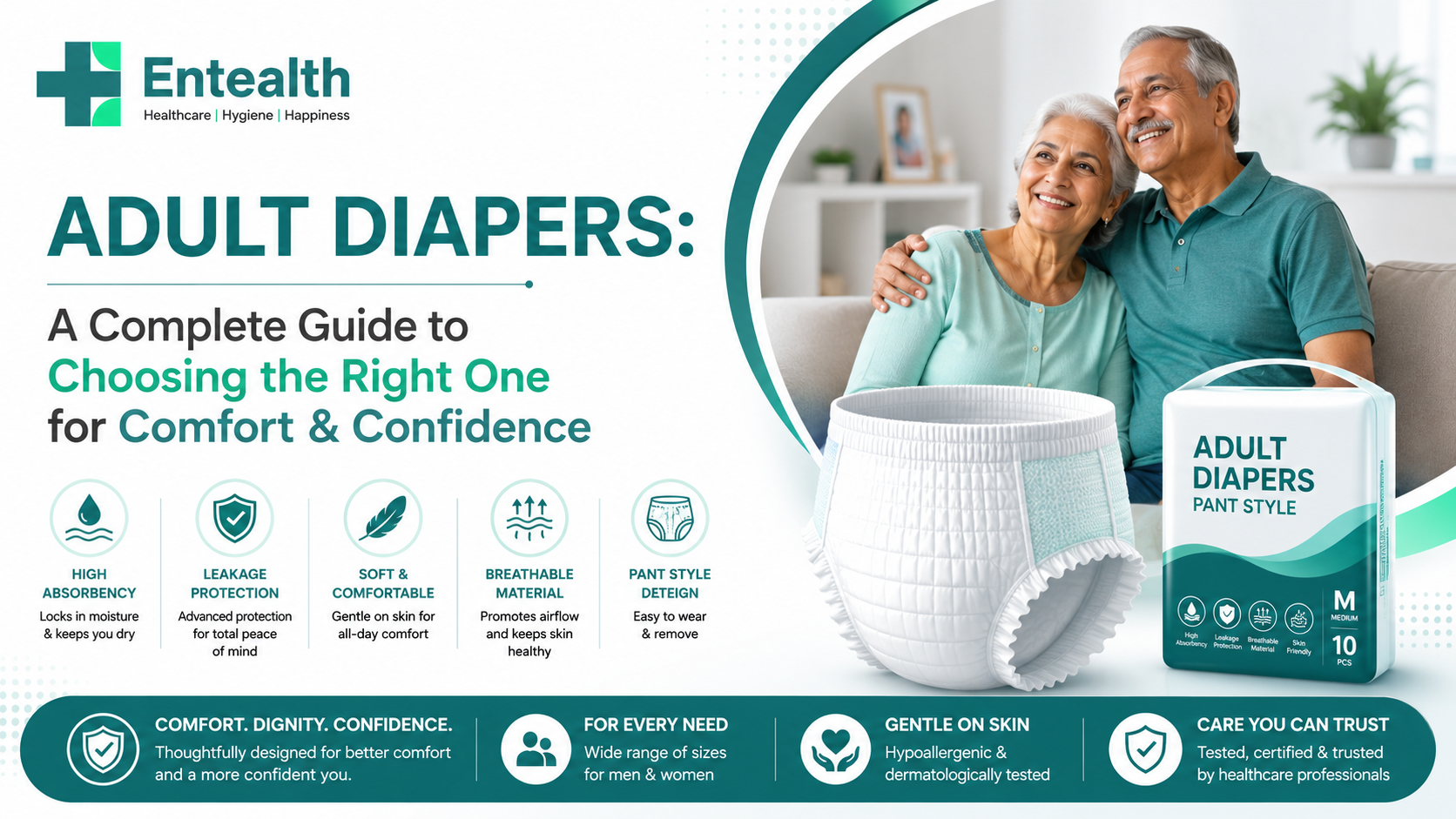
Incontinence is embarrassing, but with the right adult diapers, you or your loved ones will not feel embarrassed and spend their time doing the things they want. Therefore, it is critical to pick the most suitable option for the best comfort and confidence. There are various adult diapers, making the process of picking the best one confusing. This article covers all there is to know about incontinence products, including types, the size and absorbency guide, benefits, and more.
What Are Adult Diapers?
Adult diapers are personal care products that offer the highest level of absorbency and leak protection. The products are designed to provide comfort and convenience while giving the best level of discretion.
Adult diapers come in different sizes and levels of absorbency and cater to the needs of senior citizens, patients, and individuals with health conditions such as Parkinson’s and dementia. Moreover, the best adult incontinence products make the process of changing easier, thus reducing the number of leaks.
Who Needs Adult Diapers?
Anyone experiencing temporary or permanent loss of bladder or bowel control should consider using adult diapers. The incontinence products are recommended for
- Seniors and the elderly with age-related incontinence
- Bedridden patients and individuals with limited mobility
- Post-surgery patients
- Patients with neurological diseases
- Women with post-partum incontinence
- People with reduced mobility
Adult diapers will give the abovementioned individuals their life back by helping them feel confident in their own skin.
Types of Adult Diapers Explained
It is essential to understand the different types of adult diapers and their benefits to help you pick the best size and absorbency level. Ideally, the best option depends on the individual’s mobility, level of incontinence, and the caregiver’s availability, among other factors.
Tape-style Adult Diaper
The tape-style adult diapers have tapes on the sides that stick together to attach the product to the user’s hip or thigh. The feature allows the person to avoid straining or standing when changing, thus being the best option for bedridden patients and individuals with limited mobility.
Best for:
- Bedridden patients,
- Heavy incontinence,
- Overnight,
- Home healthcare
2. Pull-up Adult Diaper Pants
As the name suggests, pull-up adult diapers are used like pants and have the same discretion as underwear. The product is ideal for people who want to retain some independence and avoid dealing with the hassle of changing.
Best for:
- Active adults,
- Light incontinence,
- Daytime use
3. Adult Diaper Pads and Inserts
Adult diaper pads and inserts are best for light incontinence. The products are worn like regular underwear with an additional layer of protection and have high absorbency levels.
Best for:
- Light bladder leakage,
- Stress incontinence,
- Extra protection
4. Reusable Adult Diapers
Reusable adult diapers are suitable for patients requiring long-term care. The personal care products are machine washable and, therefore, cost-effective compared to disposable ones.
Best for:
- Long-term care,
- Budget-friendly option,
- Eco-friendly
How to Choose Adult Diapers: 6 Most Important Factors
Several factors should be considered when picking the best adult diapers. The following section explores the most important considerations when buying incontinence products.
1. Level of Incontinence
The first step when looking for the best adult diapers is to determine the level of incontinence. Ideally, you should compare the features of light and heavy incontinence products before making your final choice.
2. Size and Fit
It is always advisable to buy a product with the right size and fit to avoid discomfort or frequent changes due to leakage. Most manufacturers provide a size chart, so it is essential to measure your waist and hips and compare the results with the chart.
3. Mobility
Determine whether to buy tape-style adult diapers or pull-up pants. The former is ideal for bedridden patients and those with limited mobility, while the latter is suitable for active adults.
4. Skin Sensitivity
When buying a product to use on your skin, it is essential to pick the most appropriate size and material. If you will be using the product for a short time, consider buying a highly absorbent product with a soft texture.
5. Absorbency Features
Modern adult diapers come with innovative features such as high absorbency, wetness indicators, and odor eliminators, among others. The features help reduce the risk of leaks and leave a pleasant smell.
6. Your Budget and Daily Usage
If you have decided on the most suitable product, it is time to consider the budget and daily usage. Compare the prices of the products on the market before purchasing the most affordable option.
Adult Diapers for Men vs. Women
Most manufacturers make unisex adult diapers that cater to the needs of both men and women. However, some companies sell male and female-specific incontinence products. Male incontinence products have absorbent gussets at the front, whereas female ones have extra absorbency at the back.
As a result, women may find it easier to use female-specific products, whereas men may find male-specific products more comfortable.
Adult Diaper Size Chart: How to Measure Correctly
Size might be the single biggest factor in whether a diaper actually works. Even the best absorbency core in the world won’t help if the fit’s off too loose and it leaks, too tight and it marks the skin and feels miserable after a few hours.
Here’s how to measure properly:
- Use a soft measuring tape.
- Measure the waist at belly-button height, standing relaxed.
- Measure the hips at their widest point.
- Measure thigh circumference for a snug, comfortable fit around the legs.
- Check all three numbers against the brand’s own size chart — sizing isn’t standardised across manufacturers.
It takes a few extra minutes, but it’s worth it. Comfort improves, leaks drop, and the diaper actually does what it’s supposed to.
General size reference (may vary by brand)
Size | Waist Size (Approx.) | Suitable For |
Small | 60–80 cm | Slim build |
Medium | 80–100 cm | Average build |
Large | 100–130 cm | Broader build |
XL / Bariatric | 130 cm+ | Larger body frame |
Expert Tip: Red marks on the skin usually mean it’s time to size up. Leaks around the leg openings despite a proper fit? Try sizing down for a tighter seal.
Absorbency Levels Explained
When shopping for adult diapers, it is essential to understand the difference between light, moderate, heavy, and maximum absorbency. The following section explores each level of absorbency in detail.
Absorbency Level Recommended For
Light Occasional bladder leaks and stress incontinence
Moderate Everyday daytime use with moderate leakage
Heavy Severe urinary or bowel incontinence
Overnight / Maximum Bedridden users and overnight protection
Benefits of Using the Right Adult Diaper
The right adult incontinence products offer many benefits, including
- Keeping the skin dry and rash-free
- Leak-proof protection
- Effective odor control
- Enhanced comfort and confidence
- Longer usage between changes
- Easy care and handling
- Helping caregivers give the best level of care
Expert Tips for Home Care
The following are expert-level tips for caregivers looking after the person with incontinence to help them stay as comfortable as possible.
- Change the product every 4 – 6 hours or if it is wet or soiled.
- Use a higher level of absorbency at night.
- Clean and dry the skin properly during every diaper change.
- Apply a skin barrier cream
- Help the bed-bound person change positions to avoid pressure ulcers
- Buy a small pack first to try the product before buying a large pack
Skin Care and Rash Prevention
The best way to prevent rashes is to keep the skin clean and dry. Read the full guide below to care for the skin and avoid rashes.
- Wash the skin with lukewarm water or pH-balanced wipes
- Pat the skin dry; avoid rubbing
- Apply a barrier cream
- Use breathable adult diapers
- Check the skin for signs of irritation
- See a doctor if the rash does not clear up within a few days
Conclusion
When picking the best adult diapers, there are many factors to consider. The article explores everything there is to know about adult incontinence products. We hope the information will help you when buying the product for yourself or your loved one. At Entealth, we carry a wide range of personal care products to ensure that you or your loved one is comfortable all day long. Shop now to choose the best option for you.
Frequently Asked Questions
How many adult diapers does a bedridden patient need each day?
A bedridden patient needs three to five diaper changes per day. However, everybody has different needs depending on their level of incontinence and the absorbency level of the product.
Can wearing adult diapers cause UTIs?
Wearing adult diapers does not directly cause UTIs. However, it is crucial to change the product more frequently, especially at night, to reduce the risk of developing a Urinary Tract Infection (UTI).
What is the difference between tape-style diapers and pull-up pants?
Tape-style adult diapers are suitable for bedridden patients and individuals with limited mobility, whereas pull-up pants are ideal for active adults.
How do I choose the correct adult diaper size?
To choose the correct size, it is essential to measure your waist and hips and compare the results to the size chart provided by the manufacturer.
Are reusable adult diapers better than disposable ones?
Both reusable and disposable adult diapers have their pros and cons. Whereas the reusable ones are more eco-friendly and cost-effective, the disposable ones are more hygienic and convenient to use.
Can adult diapers be worn overnight?
Yes, overnight adult diapers are designed to provide the highest level of absorbency and leak protection, perfect for use at night.
