
- Your cart is empty
- Continue Shopping

Benefits of Nitrile Examination Gloves in Homecare
-
 Testing
 - Posted on

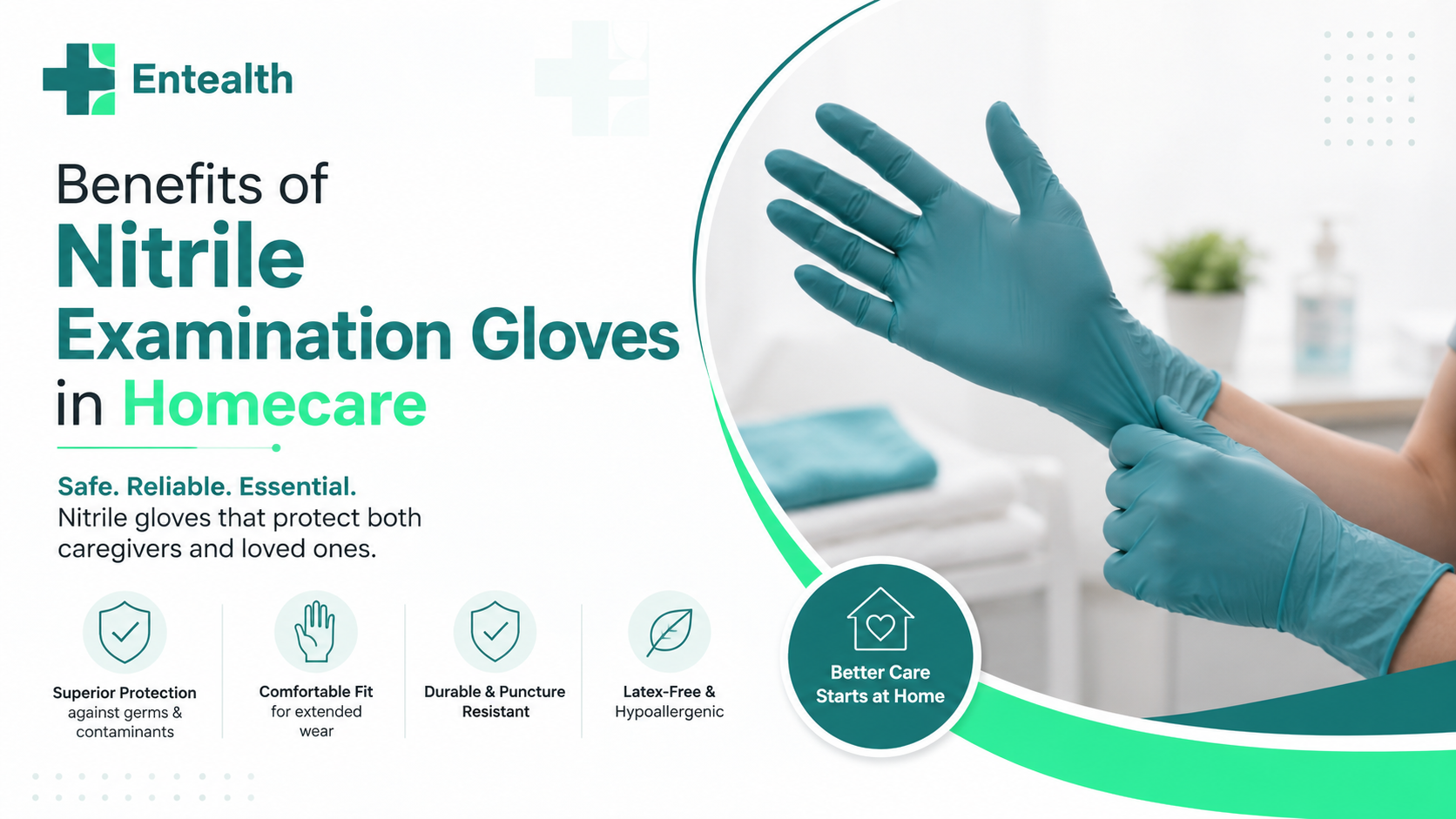
When it comes to home care, you probably have a pair of gloves tucked away in your medical bag. However, you might want to reconsider which material to go for. While gloves made from latex have long been the standard option, they come with a set of drawbacks.
Nitrile examination gloves are a popular choice among home care patients, family caregivers, and professionals due to their durability and protective qualities.
In the following sections, you will learn more about nitrile gloves and why they are the preferred option for those engaging in home healthcare activities
What Are Nitrile Examination Gloves
Nitrile examination gloves are disposable gloves made from a type of synthetic rubber called acrylonitrile-butadiene. They are used as a latex alternative in the medical sector and in everyday activities. Nitrile examination gloves do not contain any natural rubber latex, thereby eliminating the possibility of developing a latex allergy.
Why Nitrile Gloves Are important For Home care Patients?
The home care environment differs significantly from the intensive setting of a hospital. Family caregivers and healthcare professionals typically carry out their tasks in proximity to the patient, with fewer resources available to them. As such, it is even more important to choose a reliable pair of disposable gloves to reduce the risk of infection.
With nitrile examination gloves, caregivers and patients have access to a reliable protective layer that ensures a high level of protection against contaminants.
In the following sections, you will find out more about many benefits of using nitrile examination gloves as well as some useful buying tips for choosing the perfect pair for your home care duties.
Benefits of Nitrile Examination Gloves
Latex-free and hypoallergenic
Latex allergies are a serious condition, especially in the healthcare sector, where caregivers often experience allergic reactions on a regular basis. Hypoallergenic nitrile examination gloves are ideal for preventing latex allergies. In addition, nitrile gloves contain no natural latex proteins, thereby eliminating the risk of developing an allergic reaction to these types of gloves for patients and caregivers.
Superior puncture and tear resistance
Nitrile examination gloves are a superior alternative to latex and vinyl gloves due to the increased puncture and tear resistance. Such qualities are required for completing a variety of healthcare procedures as part of home care, including first aid, medication management, and catheter care.
Protection against bacteria and other contaminants
They provide a reliable barrier against bacteria, viruses, germs, and other contaminants. This benefit is crucial for activities such as catheter and dressing care, infection control procedures, and dealing with bodily fluids. All these procedures are a part of home care services available to patients.
Resistance to chemicals and oil
As part of managing the care of a loved one or a patient, caregivers may handle several hazardous substances, such as cleaning solutions, hand sanitizers, and other healthcare-specific chemicals. These gloves offer an additional degree of protection due to their resistance to chemicals and oil. Compared to vinyl, nitrile examination gloves are less likely to break down when exposed to different substances.
Superior fit and range of motion
Modern nitrile examination gloves have a thinner profile, offering enhanced dexterity and comfort while ensuring a reliable level of protection. Such qualities enable you to deal with complex procedures such as medication management or wound care with an improved level of precision and comfort.
Cost-efficiency
Nitrile examination gloves offer several advantages over latex, vinyl, and plastic gloves, yet they are typically available at a similar price. Their durability, comfort, and reliable protection make them a smart and cost-effective option for anyone involved in home care or healthcare.
Visible Damage Detection
Nitrile examination gloves feature a transparent surface that enables users to spot any damage right away. Compared to vinyl examination gloves, nitrile gloves are less likely to develop tiny holes that can be challenging to notice. Thus, nitrile examination gloves allow caregivers to ensure the integrity of the gloves before proceeding with an activity.
Common Uses of Nitrile Gloves in Homecare
You might assume that you will only need nitrile gloves to perform complex first aid procedures. However, the truth is that nitrile examination gloves are useful in a variety of activities during the home care process. Such tasks include:
Wound care and dressing change
It is common for patients to have wounds that require dressing or cleaning as a part of their home care service. Nitrile examination gloves protect the caregiver and the patient from possible contamination.
Medication administration and management
Nitrile examination gloves provide an additional layer of protection during the medication administration and management process.
Hygiene assistance
When a patient is unable to manage hygienic duties on their own, caregivers assist them with those tasks using nitrile examination gloves. This category includes toileting, bathing, and catheter care procedures, among others.
Management of bodily fluids
Nitrile examination gloves allow caregivers to handle bodily fluids such as saliva, blood, urine, and vomit in a safe and hygienic manner.
Cleaning and disinfecting
This aspect of home care service typically involves the use of chemical cleaning and disinfecting agents and requires the use of disposable gloves, such as nitrile examination gloves.
Feeding tube and catheter care
Catheter care and feeding tube procedures are delicate tasks requiring a reliable additional layer of protection.
Infection control procedures
Nitrile examination gloves are used in a variety of infection control procedures ranging from standard hand cleaning to managing infectious materials with extreme care.
How to Choose Nitrile Examination Gloves
Check the thickness
The thickness of the nitrile examination gloves impacts the extent of protection as well as the comfort of the caregiver. Typically, 3-4 mil gloves are ideal for most routine home care procedures. At the same time, 5 mil and higher thickness is required for wound care procedures and dealing with bodily fluids and waste.
Make sure the nitrile gloves are powder-free
The powder coating of gloves can cause skin irritation, which is why powder-free nitrile examination gloves are a safer and more comfortable option that prevents such reactions.
Choose the right size
The proper size of nitrile examination gloves is vitally important to ensure that the caregiver is able to complete all home care duties comfortably and safely. A properly fitting pair of nitrile gloves will prevent hand fatigue and allow the caregiver to retain a reasonable degree of precision during a task.
A textured surface offers a better grip
Caregivers should only go for textured nitrile examination gloves as they allow a better grip of slippery surfaces and objects. As a result, such gloves reduce the likelihood of accidents and make several tasks significantly easier.
Make sure the nitrile gloves are certified
Always check if nitrile examination gloves are certified and approved for medical use.
Reusing gloves
Nitrile examination gloves are intended for single-use only. As such, caregivers should avoid reusing disposable gloves as much as possible.
Failing to notice a tear or a hole
Nitrile examination gloves are transparent, meaning that damaged areas are clearly noticeable to the naked eye. As a result, caregivers should always inspect their gloves for damage before and during a task.
Selecting the wrong size
The wrong size of nitrile examination gloves will lead to compromised hand protection and dexterity.
Neglecting hand hygiene
The use of nitrile examination gloves is not sufficient to prevent the transmission of bacteria and infections. Hands should be sanitized before and after using disposable nitrile examination gloves.
Improper storage
Always store nitrile examination gloves in a cool and dry place. Exposure to direct sunlight and heat has a detrimental effect on the durability and quality of nitrile examination gloves.
Expert Tips
Always bring along a hand sanitizer and a pair of powder-free nitrile examination gloves when visiting a patient’s home.
Additionally, consider changing your disposable gloves between different tasks, such as cleaning and administering medication, even if you are dealing with the same patient. It is a good idea to have a few pairs of disposable nitrile examination gloves in your stock. Ideally, you will want to have a few pairs of gloves in various sizes on hand.
Consult a doctor before making any assumptions regarding the possible source of irritation, even with nitrile examination gloves. A professional medical opinion is essential, particularly in the case of allergies, skin conditions, and other health issues.
Summary
Nitrile examination gloves are a reliable alternative to latex ones. Such gloves are resistant to punctures and chemicals and provide an additional layer of protection against diseases and infections.
Nitrile examination gloves are suitable for a variety of home care duties, including infection control, first aid, and medication management. They come in different sizes and thicknesses to ensure that the caregiver receives a reasonable degree of comfort while being sufficiently protected. Caregivers should always change their gloves after completing each task and sanitize their hands before and after using nitrile examination gloves to reduce the risk of infection.
Nitrile examination gloves are essential for any home care patient, family caregiver, or professional caregiver as they offer a reliable level of hand protection with minimal risk of negative side effects.
Final Thoughts
A family caregiver or home care patient who has to complete several duties for a loved one or themselves can greatly benefit from opting for nitrile examination gloves. The gloves are resistant to chemicals, punctures, and tears. Such gloves help to reduce the likelihood of infection and disease transmission. Nitrile examination gloves are an essential piece of equipment for anyone involved in the home care process. Explore Entealth’s wide range of medical consumables to find the kind of disposable gloves that suits you.
Frequently Asked Questions
Can people with latex allergies use nitrile examination gloves?
Yes. Nitrile examination gloves are a perfect alternative to latex ones, as they contain no natural latex proteins.
Are nitrile examination gloves required to be changed between tasks?
Yes, nitrile examination gloves should be changed between different tasks, after coming into contact with bodily fluids, and if they are visibly damaged.
Can nitrile examination gloves be reused after washing?
No. Nitrile examination gloves are disposable and therefore should not be washed and reused.
Which thickness of nitrile examination gloves is better?
For most home care duties, 3–4 mil nitrile examination gloves provide the right balance of comfort, flexibility, and protection. They are suitable for everyday caregiving tasks such as medication handling, personal hygiene assistance, light cleaning, and general patient care.
Are nitrile examination gloves resistant to bacteria and viruses?
Nitrile examination gloves help to reduce the likelihood of bacterial transmission from caregivers to patients and from patients to caregivers. Nitrile examination gloves are ideal for use when dealing with bodily fluids and other infectious fluids, as well as performing infection control procedures.
Are nitrile examination gloves more expensive than regular latex ones?
Nitrile examination gloves are priced roughly the same as regular latex gloves these days, which makes them a very attractive alternative.
