
- Your cart is empty
- Continue Shopping

Understanding the Differences Between Nitrile and Latex Gloves
-
 Testing
 - Posted on

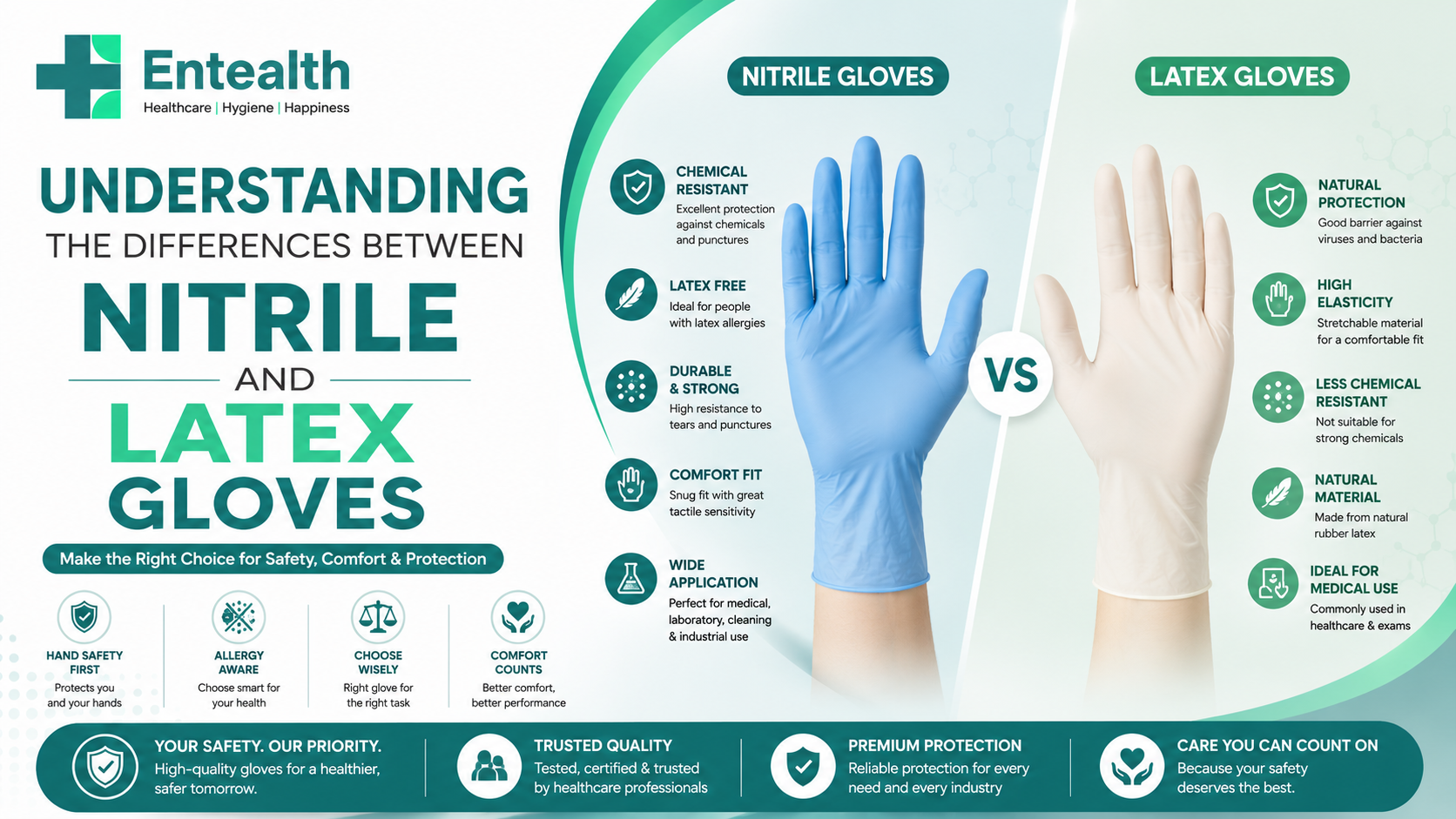
If you’re buying medical gloves for home care, a clinic, or a hospital, choosing between nitrile and latex gloves can be more important than it seems. The right gloves don’t just protect the wearer-they also reduce the risk of contamination, improve comfort during long hours of use, and help ensure safer patient care.
Many people compare nitrile gloves vs latex gloves based on price alone. However, factors such as allergy safety, puncture resistance, durability, and intended use often have a much greater impact. A glove that’s ideal for routine examinations may not be the best option for wound care, medication handling, or prolonged use.
This guide explains the real differences between nitrile and latex gloves in simple terms. Whether you’re a home caregiver, healthcare professional, or medical supplier, you’ll learn which glove is better suited to your needs, how to choose the right size, and what to consider before making a purchase.
Nitrile vs Latex at a Glance
If you’re looking for a quick comparison, nitrile examination gloves are generally the preferred choice for most home care and healthcare applications. They’re latex-free, highly durable, and offer excellent resistance to punctures, chemicals, and bodily fluids, making them suitable for routine patient care.
Latex gloves, on the other hand, are valued for their natural elasticity and superior tactile sensitivity. They’re often used for procedures that require precise hand movements, provided neither the wearer nor the patient has a latex allergy.
In short, if safety, durability, and everyday protection are your priorities, nitrile gloves are the better option. If flexibility and a second-skin feel are more important, and there’s no concern about latex allergies, latex gloves remain a suitable choice.
What Are Nitrile Gloves?
Nitrile gloves are disposable medical gloves made from nitrile-butadiene rubber (NBR), a synthetic material designed to provide reliable protection without natural latex. Since they’re completely latex-free, they’re a safer choice for people with latex allergies or sensitivities, which is why they’re widely used in both home care and healthcare settings.
What makes nitrile gloves stand out is their balance of strength, comfort, and protection. They offer excellent resistance to punctures, tears, many chemicals, and bodily fluids while maintaining a snug fit that allows for precise hand movements. Whether you’re changing a wound dressing, assisting an elderly patient, handling medication, or performing a routine medical examination, nitrile gloves give you the confidence to do so safely.
What Are Latex Gloves?
Latex gloves are disposable medical gloves made from natural rubber, which is extracted from the Hevea brasiliensis rubber tree. Their natural composition gives them excellent elasticity and a close-fitting feel, allowing for greater tactile sensitivity during precision tasks.
One important consideration is that latex contains natural rubber proteins, which can trigger allergic reactions in some people. These reactions may range from mild skin irritation to more serious symptoms, particularly with repeated exposure. For this reason, it’s important to consider both the wearer’s and the patient’s sensitivity before choosing latex gloves.
Despite this limitation, latex gloves continue to be used in certain healthcare settings where exceptional flexibility and dexterity are required, provided there’s no known risk of latex allergy. However, for everyday healthcare tasks, many hospitals and clinics now prefer latex-free nitrile examination gloves because they offer dependable protection while reducing allergy concerns.
Nitrile vs Latex: Comparison Table
Here’s a side-by-side comparison to help you quickly understand how nitrile and latex gloves differ across the factors that matter most in healthcare and home care settings.
Feature | Nitrile Gloves | Latex Gloves |
Material | Made from synthetic nitrile butadiene rubber (NBR), making them completely latex-free. | Made from natural rubber latex derived from rubber trees. |
Allergy Risk | Safe for users with latex allergies as they contain no natural rubber proteins. | May trigger allergic reactions in some individuals due to natural latex proteins. |
Puncture Resistance | Highly resistant to punctures and tears, making them suitable for demanding medical tasks. | Good flexibility but generally less resistant to punctures than nitrile. |
Chemical & Fluid Resistance | Resists many disinfectants, chemicals, oils, and bodily fluids. | Suitable for basic medical use but offers lower chemical resistance than nitrile. |
Fit & Comfort | Provides a snug fit with improved comfort for extended wear. | Highly elastic and conforms closely to the hand for a natural feel. |
Tactile Sensitivity | Offers excellent control for most examination and caregiving tasks. | Slightly better tactile sensitivity, making it suitable for procedures requiring precision. |
Durability | Designed to withstand extended use with reduced risk of tearing during daily caregiving tasks. | Comfortable for shorter procedures but may wear out more quickly under demanding conditions. |
Best Suited For | Home patient care, wound dressing, medication handling, clinics, hospitals, and elderly care. | Medical procedures requiring maximum dexterity where latex allergy is not a concern. |
Cost | Usually costs slightly more upfront but often lasts longer due to better durability. | Generally more affordable, making it suitable for short-duration tasks. |
Shelf Life | Better resistance to heat, light, and aging, resulting in a longer storage life. | More susceptible to degradation over time if not stored properly. |
Nitrile Gloves vs Latex Gloves: Detailed Breakdown
While both nitrile and latex gloves provide effective barrier protection, they differ in terms of safety, durability, comfort, and performance. Understanding these differences can help you choose the right gloves for home care, clinics, hospitals, and other healthcare environments.
1. Allergy Safety
One of the biggest advantages of nitrile gloves is that they’re completely latex-free, making them a safer choice for people with latex allergies or sensitivities. Latex gloves contain natural rubber proteins that may cause allergic reactions, especially with repeated use. This is why many healthcare providers now prefer nitrile gloves for everyday medical use.
2. Durability and Puncture Resistance
Nitrile gloves are more resistant to punctures and tears, making them suitable for tasks such as wound dressing, medication handling, and patient care. Latex gloves are flexible and comfortable, but may be more prone to tearing during demanding procedures.
3. Chemical and Fluid Resistance
Nitrile offers better resistance to disinfectants, oils, and many chemicals commonly used in healthcare settings. It also provides a dependable barrier against bodily fluids, making it a practical choice for routine examinations and caregiving tasks.
4. Comfort and Fit
Latex gloves are known for their excellent elasticity and close-fitting feel, offering superior tactile sensitivity. Modern nitrile gloves have also become more flexible, providing a snug, comfortable fit that is well-suited to extended wear.
5. Cost
Latex gloves are generally more affordable than nitrile gloves. However, nitrile’s higher durability can reduce the need for frequent glove changes, making it a cost-effective option for regular use over time.
6. Shelf Life
Nitrile gloves have a longer shelf life because they resist heat, light, and aging better than latex. Latex gloves can degrade more quickly if stored in unsuitable conditions, making nitrile a better option for long-term storage.
Which Gloves Are Best for Home Caregivers?
For family members caring for elderly or bedridden patients at home, nitrile examination gloves are generally the better choice. They provide reliable protection during everyday caregiving tasks. Whether you’re changing dressings, assisting with personal hygiene, or handling medication, nitrile gloves help maintain hygiene without increasing the risk of latex allergies.
They’re particularly suitable for:
- Wound dressing and first aid
- Bathing and personal hygiene assistance
- Changing adult or baby diapers
- Medication handling
- General home patient care
Which Gloves Are Best for Clinics and Hospitals?
In most healthcare settings, nitrile gloves have become the preferred option for general medical examinations. Their resistance to punctures, chemicals, and bodily fluids, combined with their latex-free composition, makes them suitable for frequent use by doctors, nurses, and caregivers.
Latex gloves are still used for certain procedures where superior elasticity and tactile sensitivity are important, provided neither the healthcare professional nor the patient has a latex allergy.
How to Choose the Right Glove Size?
Choosing the correct glove size is just as important as selecting the right material. Gloves that are too loose can affect grip and precision, while gloves that are too tight may tear more easily and cause discomfort during extended use.
To find the right fit:
- Measure the circumference of your palm at its widest point, excluding the thumb.
- Compare the measurement with the manufacturer’s size chart.
- Most examination gloves are available in Small, Medium, Large, and Extra Large sizes. Medium is the most commonly used size for adults.
- If you’re between sizes, choose based on your intended use—opt for a snug fit for precision tasks or a slightly looser fit for longer wear.
Common Mistakes When Buying Medical Gloves
Choosing the right medical gloves isn’t just about picking the lowest-priced option. A few common mistakes can affect both safety and comfort during use.
- Choosing gloves based only on price instead of protection and durability.
- Ignoring the correct glove size, which can reduce grip and increase the risk of tearing.
- Buying powdered gloves without checking whether powder-free gloves are recommended for the intended use.
- Using latex gloves without considering whether the caregiver or patient has a latex allergy.
- Storing gloves in hot or humid places, which can shorten their shelf life and affect performance.
Expert Tips for Safe Glove Use
Using gloves correctly is just as important as choosing the right type. Following a few simple practices can help maintain hygiene and reduce the risk of contamination.
- Wash and dry your hands before and after wearing gloves.
- Change gloves between tasks, especially when moving from one patient or procedure to another.
- Never reuse disposable gloves, even if they appear clean.
- Store gloves in a cool, dry place away from direct sunlight and moisture.
- If there’s a risk of latex allergy, choose latex-free nitrile gloves for routine patient care.
Conclusion
Both nitrile and latex gloves provide reliable barrier protection, but the right choice depends on where and how they’ll be used. Latex gloves remain a good option for procedures that require exceptional flexibility and tactile sensitivity, provided there’s no risk of latex allergy.
For most home caregivers, clinics, hospitals, and healthcare professionals, nitrile examination gloves offer the best combination of safety, durability, and everyday comfort. Their latex-free composition, strong puncture resistance, and longer shelf life make them a dependable choice for routine patient care.
If you’re selecting gloves for home care or clinical use, consider the level of protection, comfort, and fit you need before making a decision. Choosing the right gloves today can help ensure safer and more efficient care tomorrow.
Frequently Asked Questions
Are nitrile gloves better than latex gloves?
For most home care and healthcare applications, yes. Nitrile examination gloves offer better puncture resistance, a longer shelf life, and are completely latex-free, making them a safer choice for people with latex allergies. Latex gloves are still preferred for certain procedures that require exceptional flexibility and tactile sensitivity.
Do nitrile gloves contain latex?
No. Nitrile gloves are made from synthetic nitrile rubber and do not contain natural latex proteins. This makes them a suitable option for people with latex allergies, and one of the reasons they’re widely used in hospitals, clinics, and home care settings.
Which glove is best for elderly patient care at home?
Nitrile examination gloves are generally recommended for home caregivers because they’re durable, latex-free, and provide reliable protection during wound dressing, bathing assistance, medication handling, and other daily caregiving tasks.
Can nitrile gloves cause allergic reactions?
True nitrile allergies are uncommon. However, a small number of people may experience skin irritation from chemical accelerators used in manufacturing. If you have sensitive skin, consider choosing accelerator-free nitrile gloves after consulting the manufacturer or healthcare provider.
How long do nitrile gloves last in storage?
When stored in a cool, dry place away from direct sunlight and moisture, unopened nitrile gloves typically have a longer shelf life than latex gloves. Always check the manufacturer’s expiry date and storage instructions before use.
Are powder-free gloves better than powdered ones?
In most healthcare settings, yes. Powder-free gloves reduce the risk of skin irritation and minimize airborne particles that may contaminate the surrounding environment. They’re also the preferred choice for routine examinations and patient care.
Can I reuse disposable nitrile or latex gloves?
No. Disposable nitrile and latex gloves are designed for single use only. Reusing them can compromise hygiene and increase the risk of contamination. Always replace gloves after each task or immediately if they become torn, punctured, or visibly soiled.
