- Your cart is empty
- Continue Shopping

-40%
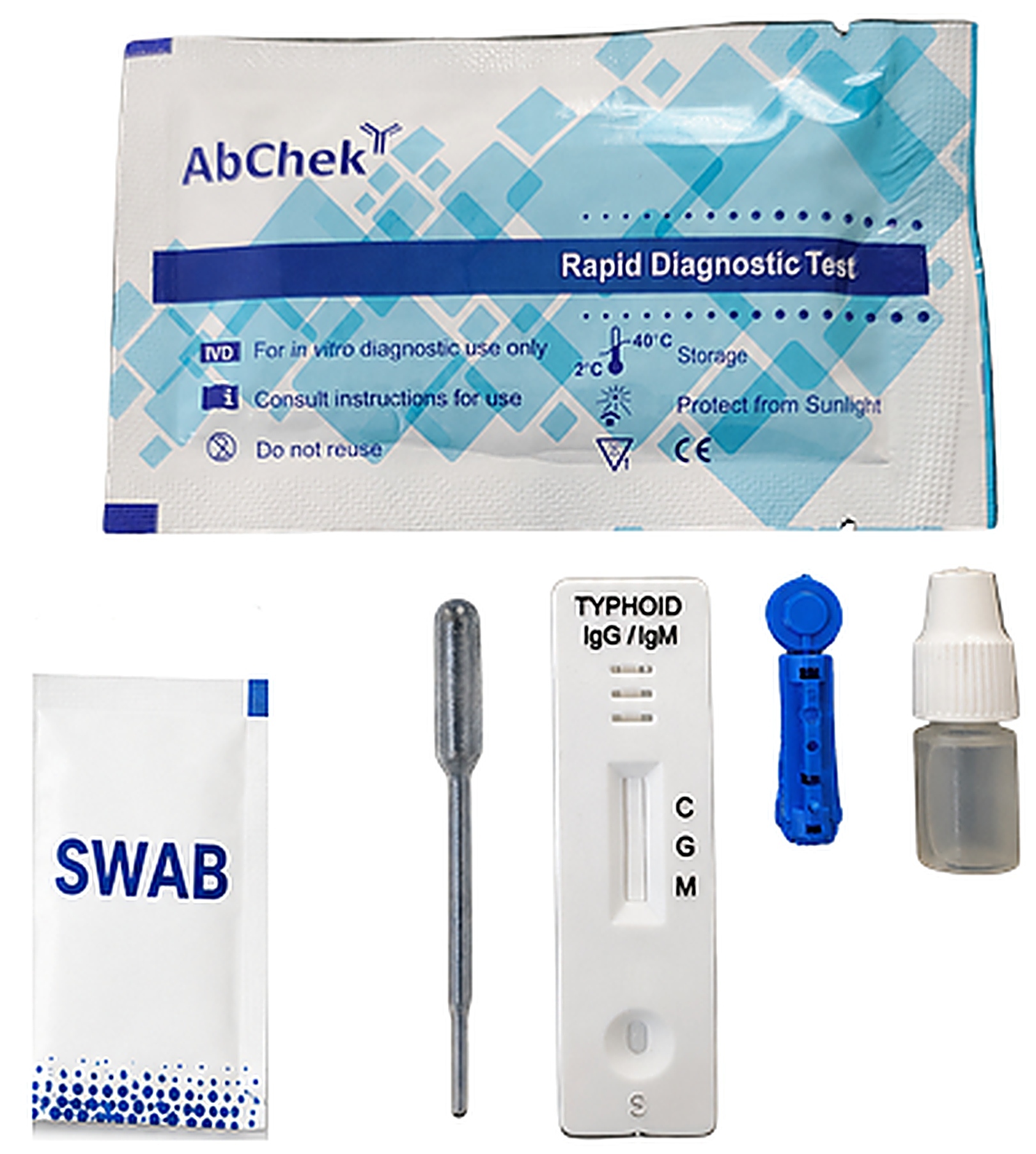
Nulife Rapid Test Kit (Typhoid IgG/IgM)
₹285.00Current price is: ₹285.00. Original price was: ₹475.00. 40% Off
Nulife Rapid Test Kit (Typhoid) is a single-use, in-vitro diagnostic (IVD) lateral-flow test that detects and differentiates Salmonella typhi (S. typhi) IgG and IgM antibodies in serum, plasma or whole blood. It gives clear results in about 20 minutes and serves as a rapid screening aid in the diagnosis of typhoid infection.
Anywhere in India
Free Shipping
Quality Products
Best Prices
Add to cart
Buy Now
Overview
The Nulife Rapid Test Kit (Typhoid) is a lateral-flow immunoassay for the simultaneous detection and differentiation of anti–Salmonella typhi (S. typhi) IgG and IgM antibodies in human serum, plasma or whole blood.
Intended Use
Intended as a screening test and an aid in the diagnosis of infection with S. typhi, for in-vitro diagnostic (IVD) use only. Any reactive (positive) specimen should be confirmed with an alternative method such as ELISA or PCR, together with clinical findings, before a diagnostic decision is made.
What’s in the Kit
Each pack contains everything needed for a single test: the test cassette, a sample diluent (buffer) bottle, a disposable dropper/pipette, a sterile lancet, an alcohol swab and the instructions for use.
Directions for Use
1. Bring the specimen and all test components to room temperature. If refrigerated or frozen, mix the specimen well before testing.
2. Open the pouch at the notch, remove the test device and place it on a clean, flat surface. Label the device with the specimen’s ID number.
3. Add the sample:
• Whole blood – add 1 drop (about 20 µL) into the sample well, then immediately add 2 drops (about 60–70 µL) of sample diluent (buffer).
• Serum or plasma – holding the dropper vertically, add 1 drop (about 30–35 µL) into the sample well, avoiding air bubbles, then immediately add 2 drops of sample diluent.
4. Start a timer. Read the result at 20 minutes; strong positives may appear in as little as 1 minute. Do not read the result after 30 minutes, and discard the device after interpreting the result.
Reading the Result (C = Control, G = IgG, M = IgM)
• Negative – only the C band appears (no anti–S. typhi antibody detected).
• IgG positive – the C band plus the G band appear.
• IgM positive – the C band plus the M band appear.
• IgG & IgM positive – the C band plus both the G and M bands appear.
• Invalid – if the C band does not appear, the test is invalid; repeat with a new device.
Storage & Handling
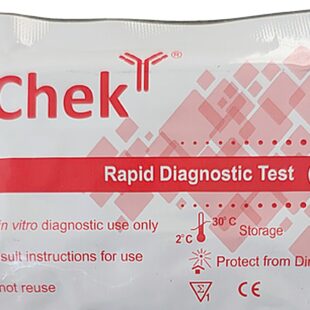
Store the kit at 2–40°C, protected from sunlight. Single use only — do not reuse. Treat all specimens as potentially infectious and handle using standard bio-safety procedures.
| Brand | Nulife |
| Product name | Typhoid IgG/IgM Antibody Rapid Test |
| Product type | Rapid diagnostic test kit (lateral-flow immunoassay) |
| Test for | Typhoid — Salmonella typhi (S. typhi) antibodies |
| Detects | IgG and IgM (detects and differentiates both) |
| Specimen types | Serum, plasma or whole blood (fingertip or venipuncture) |
| Result time | ~20 minutes (positives can show from 1 minute; do not read after 30 minutes) |
| Result bands | C = Control, G = IgG, M = IgM |
| Kit contents | Test cassette, sample diluent (buffer), dropper/pipette, sterile lancet, alcohol swab, instructions for use |
| Intended use | In-vitro diagnostic (IVD) screening aid; confirm positives with ELISA/PCR and clinical findings |
| Storage | 2–40°C, protect from sunlight |
| Reusable | No — single use only |
| Certification | CE-marked (IVD) |
| Pack size | Single-use test kit |
Related products
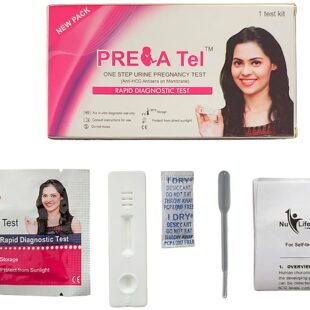
Nulife Rapid Test Kit (Pregnancy hCG)
₹43.00Current price is: ₹43.00. Original price was: ₹58.00. 26% Off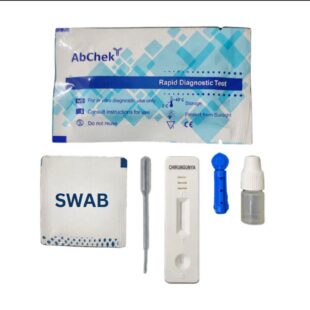
Nulife Rapid Test Kit (Chikungunya IgG/IgM)
₹285.00Current price is: ₹285.00. Original price was: ₹475.00. 40% Off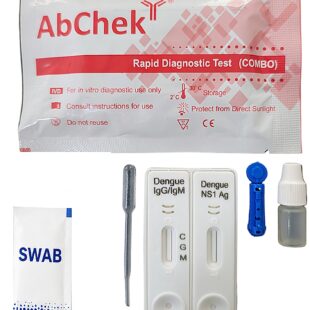
Nulife Rapid Test Kit (Dengue Combo NS1 + IgG/IgM)
₹310.00Current price is: ₹310.00. Original price was: ₹425.00. 27% Off